
Our Vision
Our vision is to create housing that is both affordable and sustainable. We believe this is no longer a distant ideal—it is a responsibility of modern development.
As communities grapple with rising living costs, environmental pressures, and shifting demographic needs, the way we design and build homes must evolve. Successful housing development today requires an approach that honours both social equity and environmental stewardship, recognising that one cannot truly flourish without the other.
At its core, affordable housing is about dignity. It ensures that individuals and families have access to safe, stable, and high-quality living environments without sacrificing other essentials of life. Yet affordability must not come at the expense of long-term resilience or the health of our planet. Sustainable design has become fundamental to ensuring that housing remains viable, cost-effective, climate-ready for generations whilst meeting the needs of its occupiers. Integrating energy-efficient systems, durable materials, and climate-responsive design reduces the operational costs for residents and helps lower the environmental footprint of entire neighbourhoods.
We consider that delivering affordable and sustainable housing is about building more than structures. It is about creating communities where people can live happily—where stability, environmental responsibility and opportunity are woven seamlessly into daily life. By embracing these ideals we aim to create homes that people want to live in without harming the local environment.
A Mixed Community
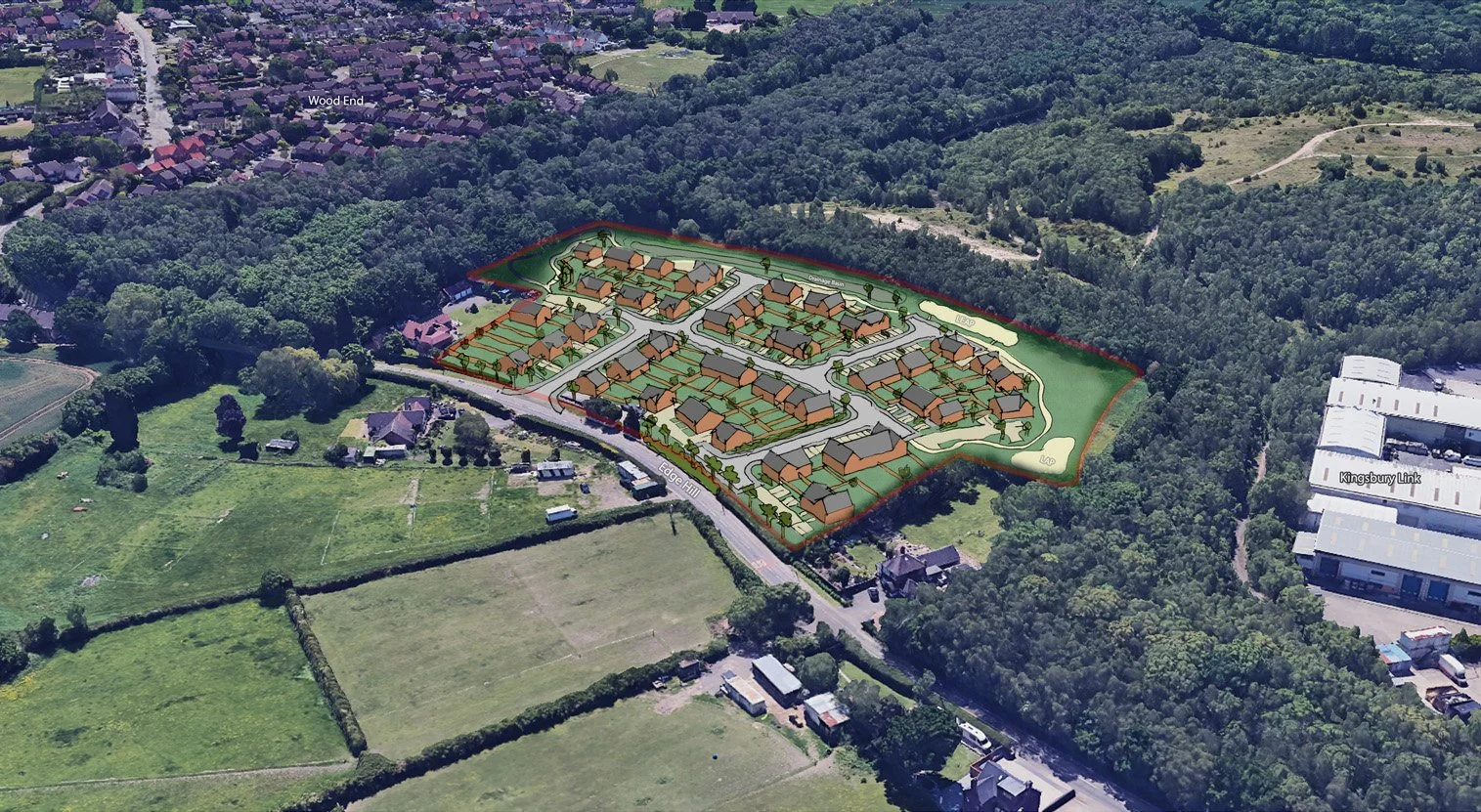
Our proposals will provide approximately 73 new affordable homes as a mix of rented and shared ownership homes of between 1 and 4 bedrooms with the greatest proportion being 2 or 3 bedroom houses.
Our homes will be suitable for those seeking their first home, a home to start or raise a family, or a home to retire to. The proposed mix will help to meet local identified housing need.
Layout
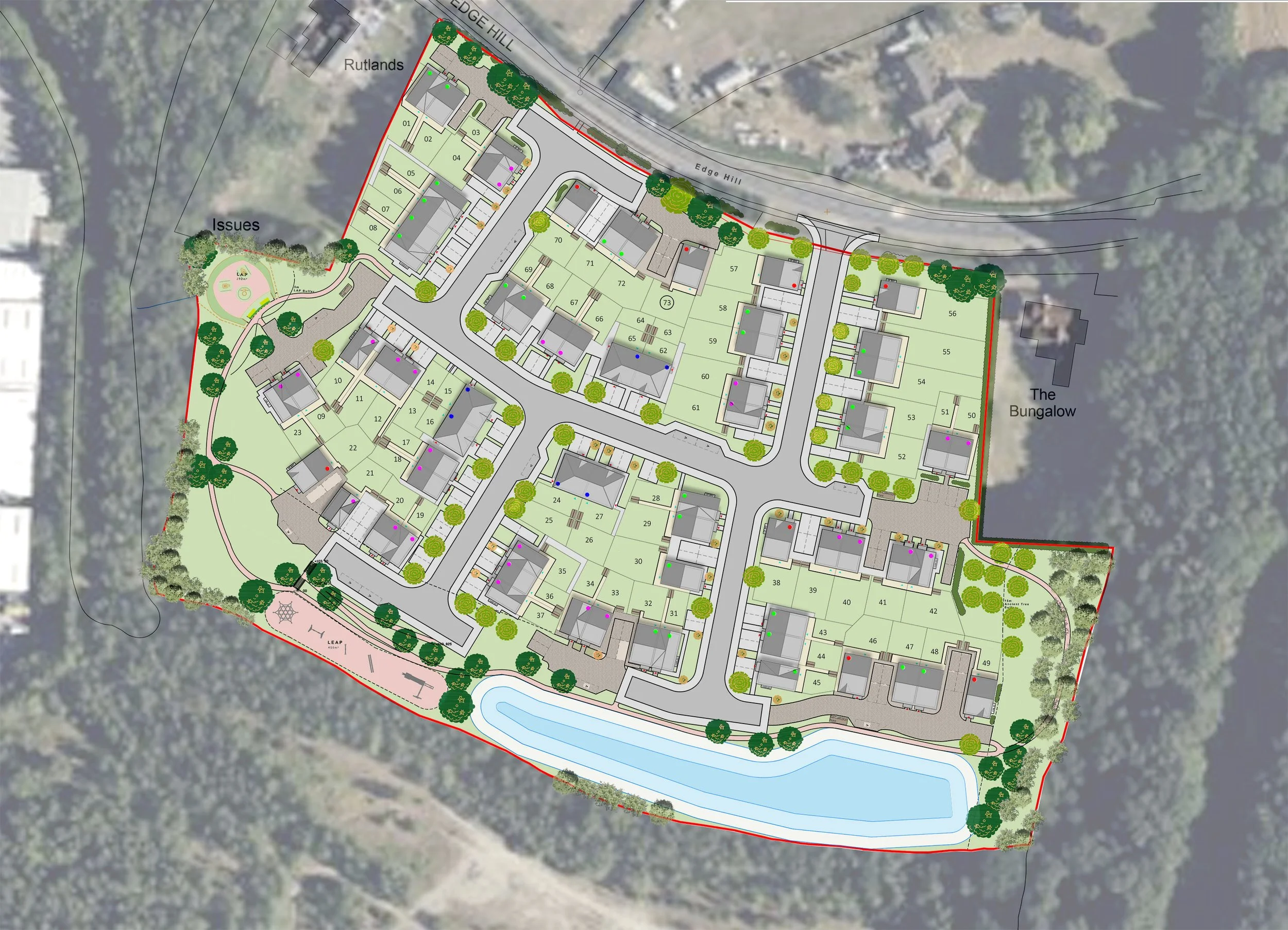
The development will be served by a single access/exit point from Edge Hill. Within the site, the homes will be designed to create a series of perimeter blocks with houses fronting to Edge Hill and the internal roads with their gardens backing on to each other to provide a safe and secure development.
Open space will be provided in the southern part of the Site that will provide amenity open space for all, play space for children, act as a buffer to the trees on the site edges and include our proposals for a sustainable drainage basin, landscaping and biodiversity net gain.
-
The access junction will be designed to meet required widths and visibility splays to ensure highway safety. Within the site, each of the roads will be designed to accord with local highways design guidelines, allow for safe movement and turning of vehicles including refuse and emergency service vehicles.
Vehicle and cycle parking will be provided to accord with the North Warwickshire Council guidelines. Paths will be provided alongside the road to allow safe pedestrian access.
-
All of our proposed buildings will be a maximum of 2-storeys tall to reflect local building heights. They will be designed to reflect the local character of Wood End and Whateley Villas and be constructed from red brick with tiled pitch roofs. Each home will have a generous garden.
Buildings will be sited so they comply with the Council’s required separation distances to existing homes and each other. Each home will include parking (car and cycle) in accordance with the Council guidelines.
Housing Mix
All of the houses will be affordable homes as a mix of rented and shared ownership (majority as rented).
There will be a mix of 1-4 bedroom homes with the largest 2 and 3 bedroom houses forming the majority. See the table below for the full breakdown.
| Dwelling Type | Height (Storeys) | Amount |
|---|---|---|
| 1 Bed / 2 People | 2 | 12 |
| 2 Bed / 4 People | 2 | 27 |
| 3 Bed / 5 People | 2 | 26 |
| 4 Bed / 6 People | 2 | 8 |
| TOTAL | 73 |
Housetypes
-

House Type A1
-

House Type A2
-
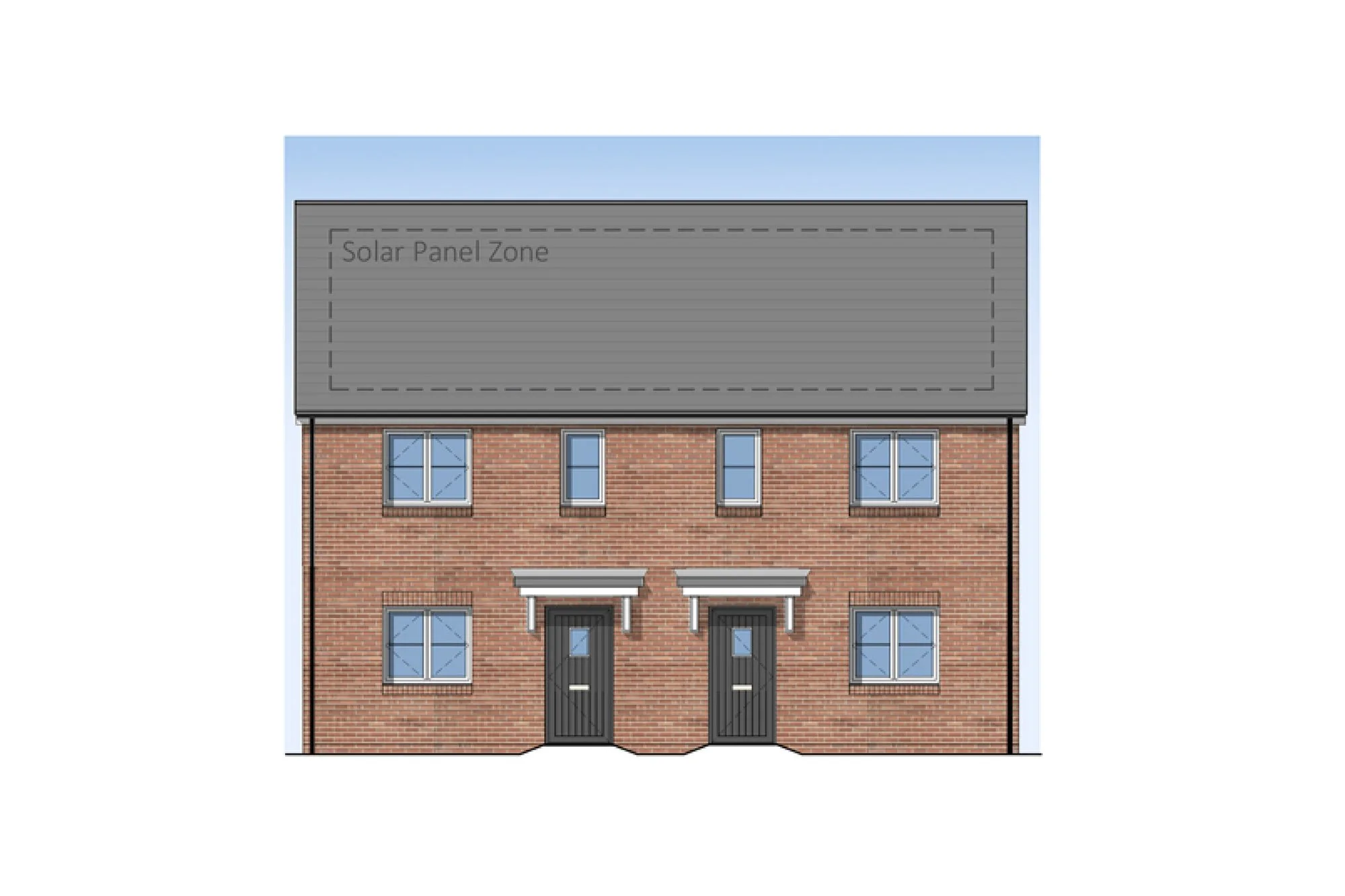
House Type B1
-

House Type B2
-
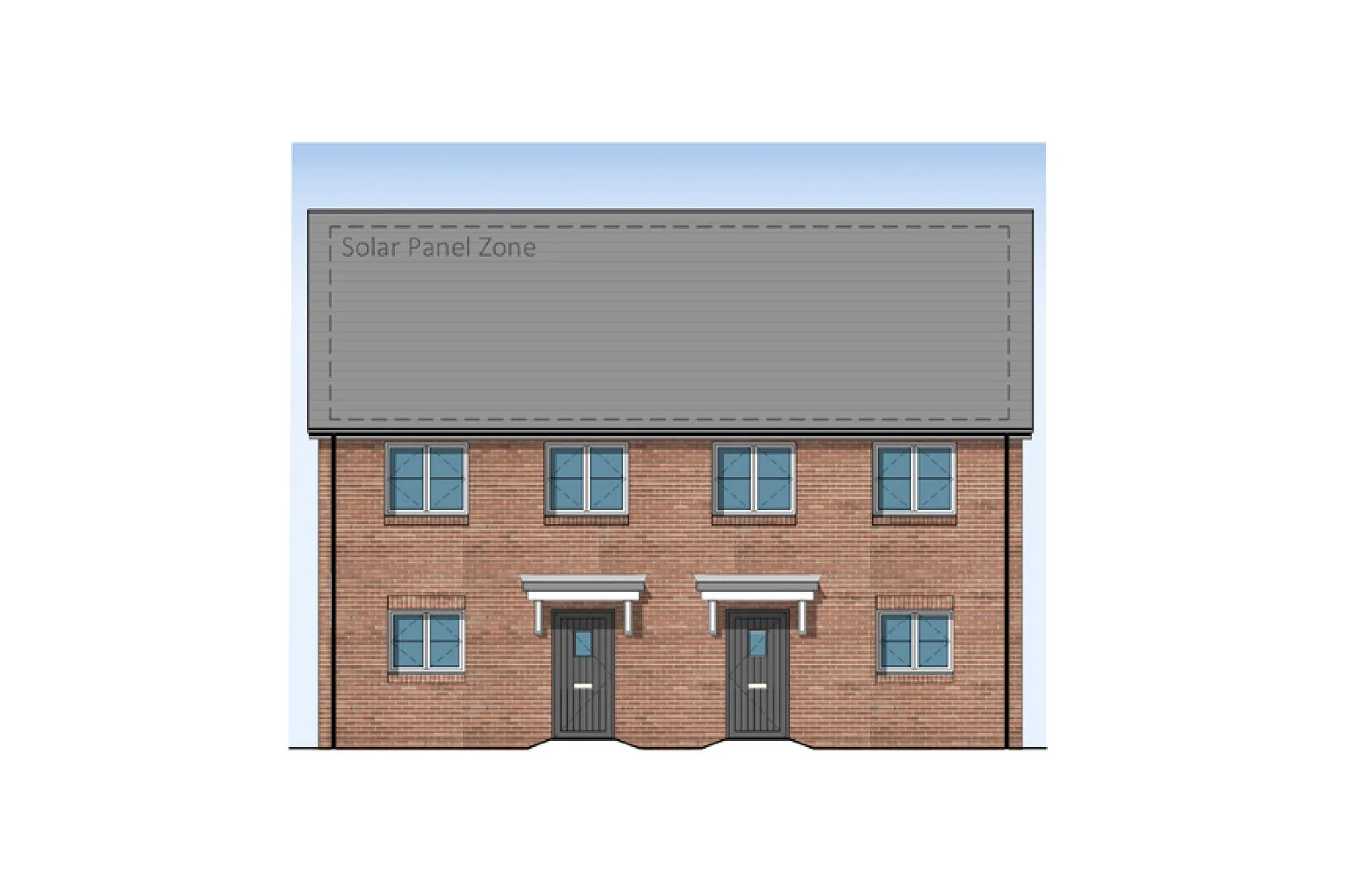
House Type C1
-

House Type C2
-

House Type D1
-
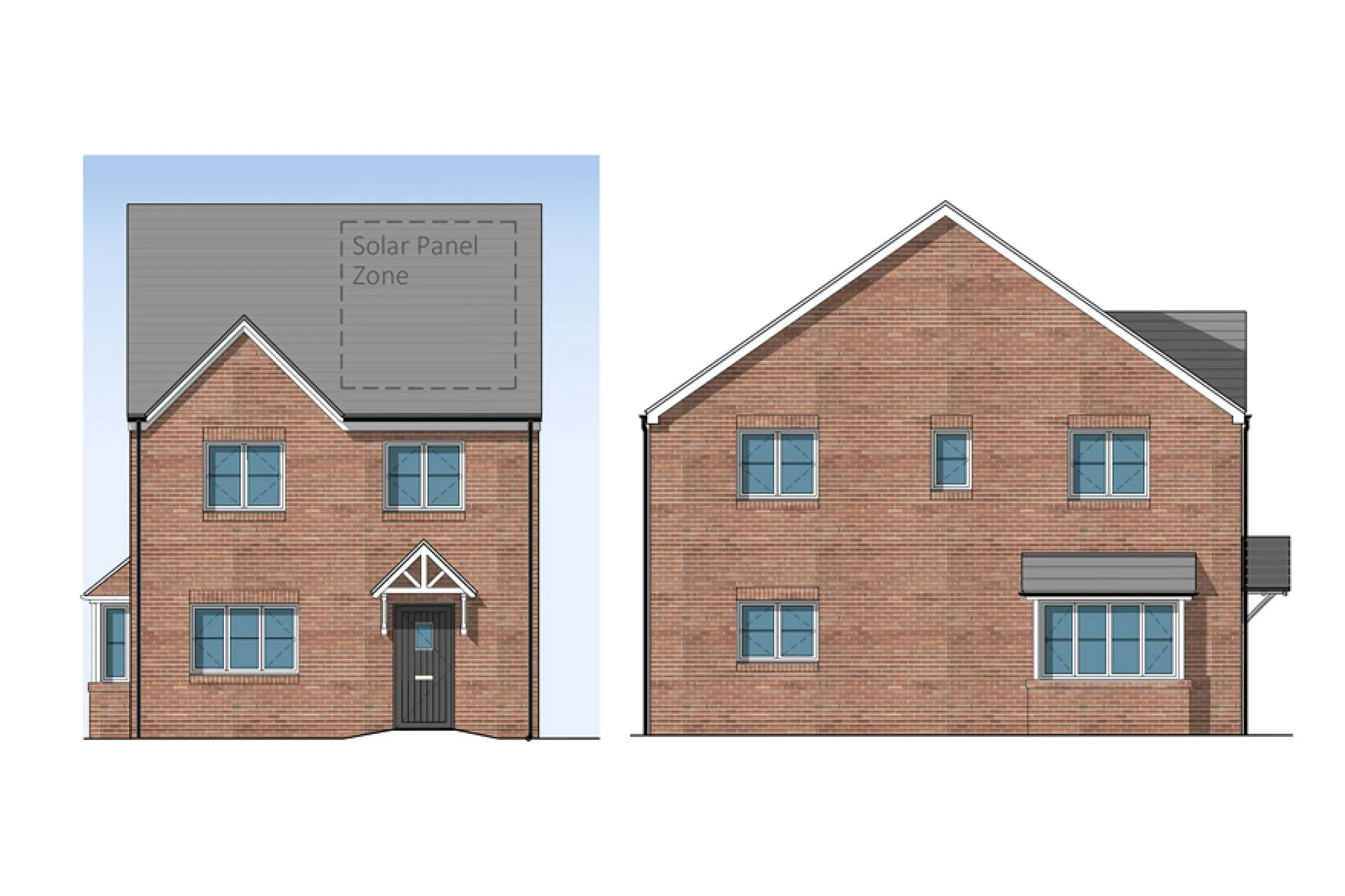
House Type D2
Sustainability
The site is considered to be in a sustainable location with available alternatives to the car including bus services to Tamworth, Kingsbury and Coleshill, six days a week, enabling sustainable travel to local population and employment centres. Local walking and cycling routes /paths are available with the main village facilities approximately a 5-7 minutes’ walk.
The development aims to deliver a residential scheme which reduces energy demand and carbon emissions through a range of targeted passive and active measures suited to the specific energy needs of the type of development.
Measures incorporated into the buildings to reduce energy demand include:
Optimising passive solar gain where possible;
Prioritising natural daylighting, whilst acknowledging Part O of the Building Regulations;
A Fabric First approach to design and construction;
Energy efficient lighting and controls, as part of a wider smart home strategy to monitor energy use.
Overall the development aims to deliver these proposals which surpass the 2010 Building Regulations, whilst keeping one eye on the emerging Future Homes standards.
Water efficient fixtures and fittings will be provided to reduce water use/wastage including low flow fittings, rainwater harvesting (where appropriate). Water butts will be provided for each dwelling.
A Construction Management Plan will be agreed with the Council to manage operations on site to ensure neighbouring amenity is not unduly affected during construction. The contractors will be required to be a member of the Considerate Contractors Scheme.
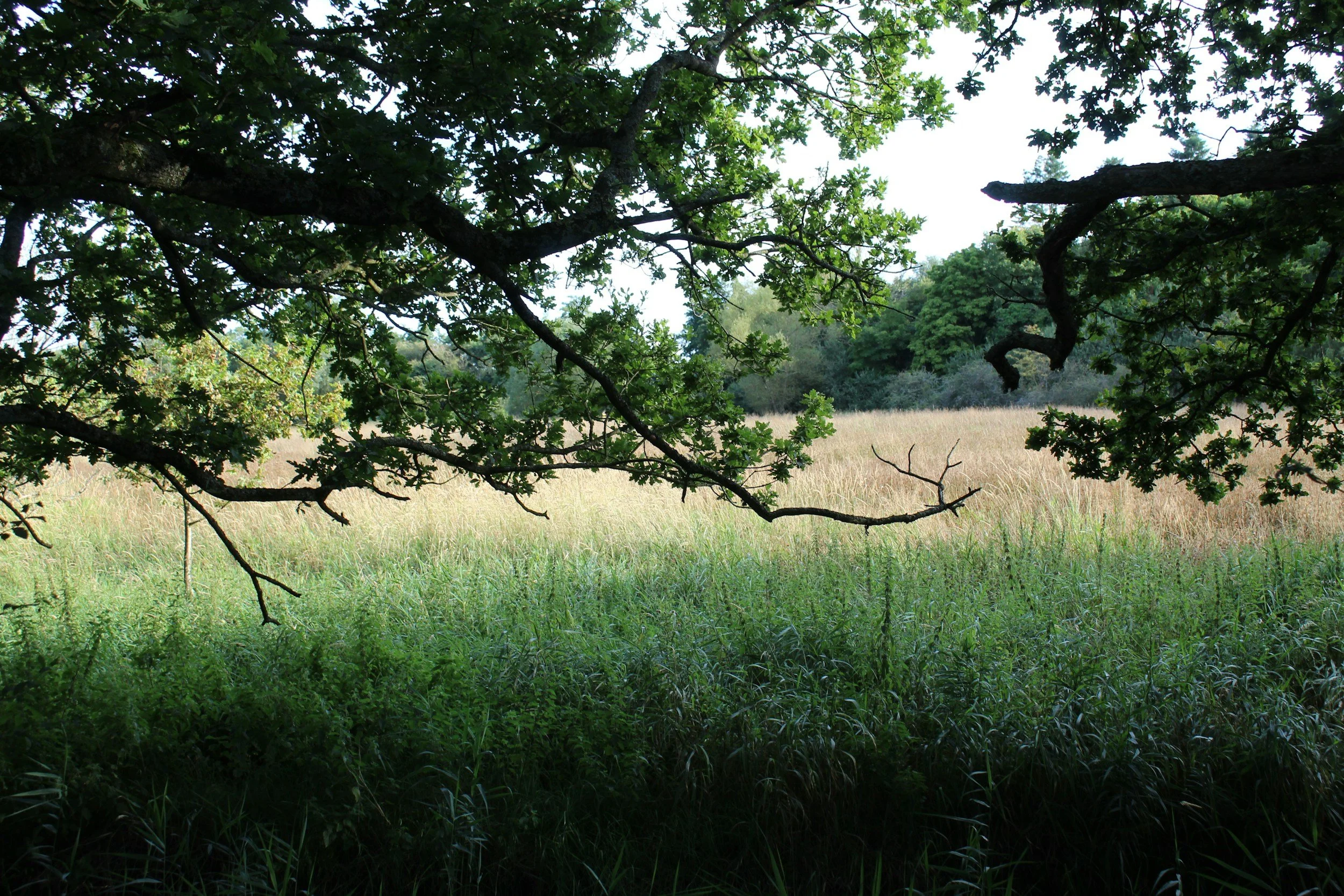
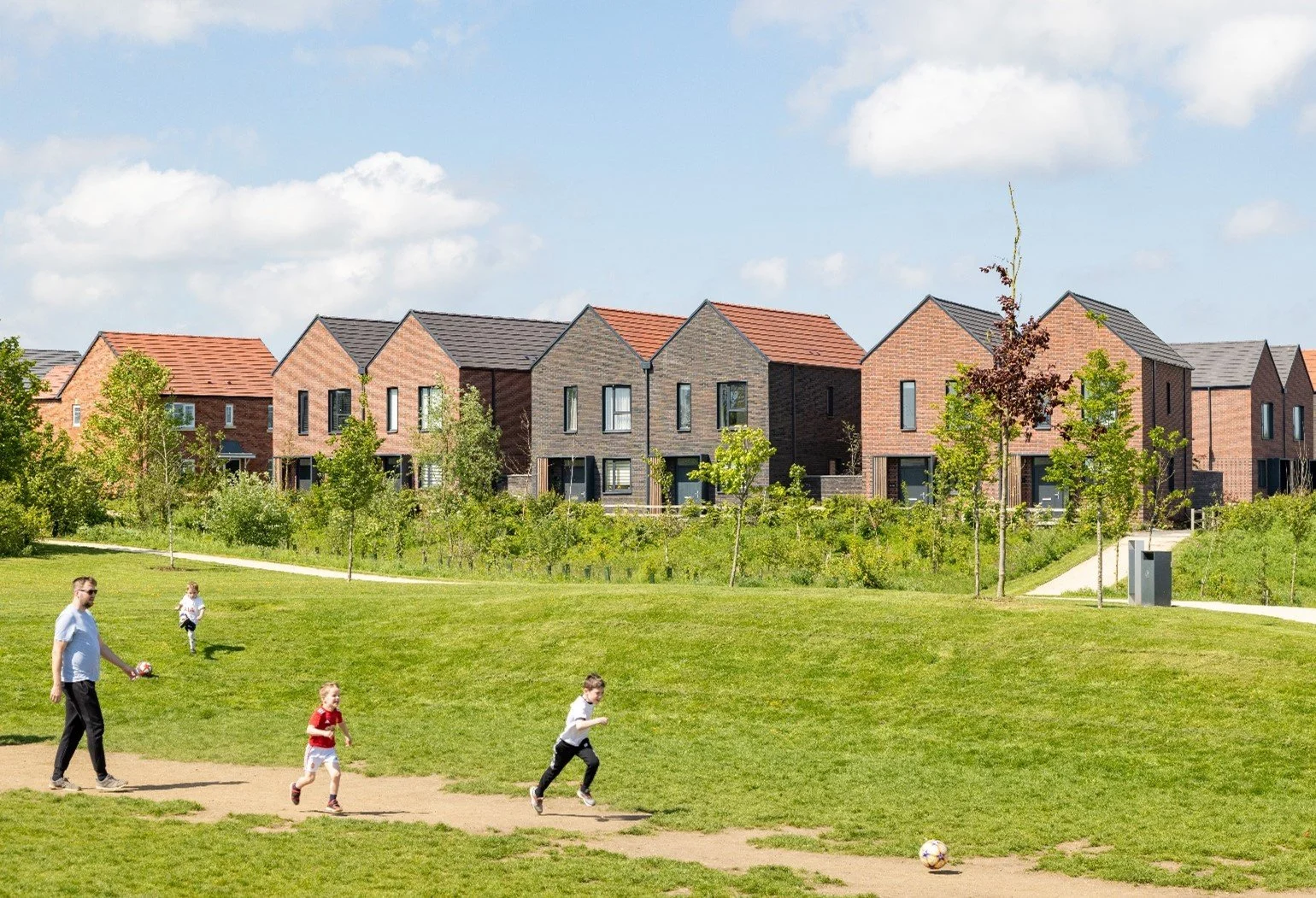
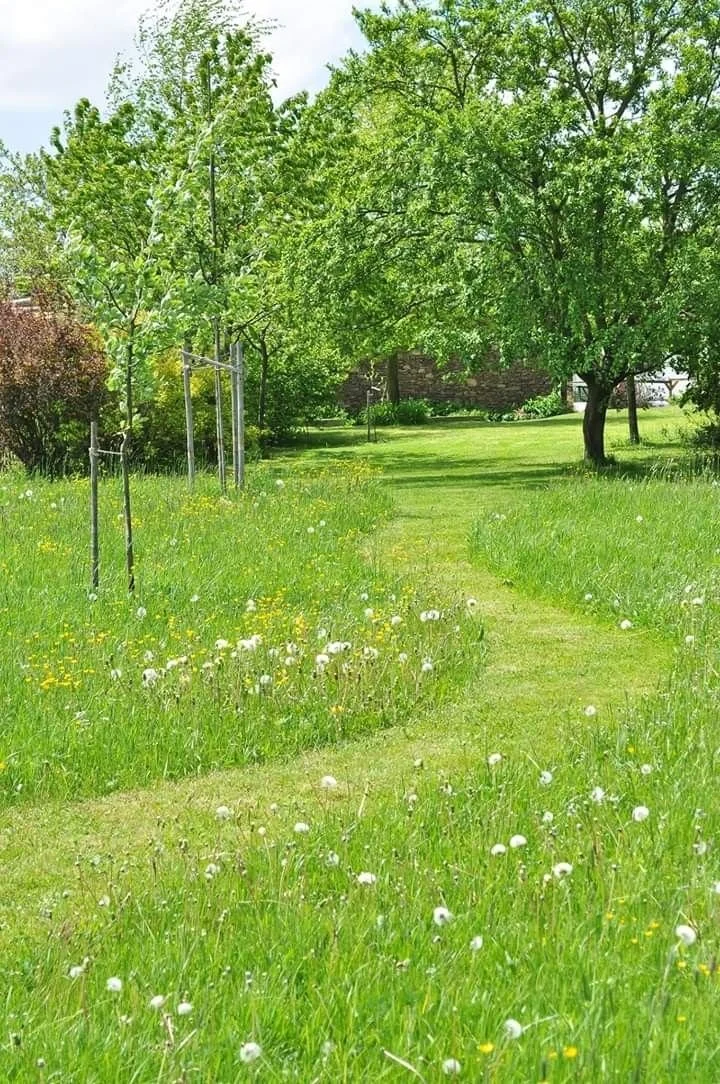
Landscape precedent images
-
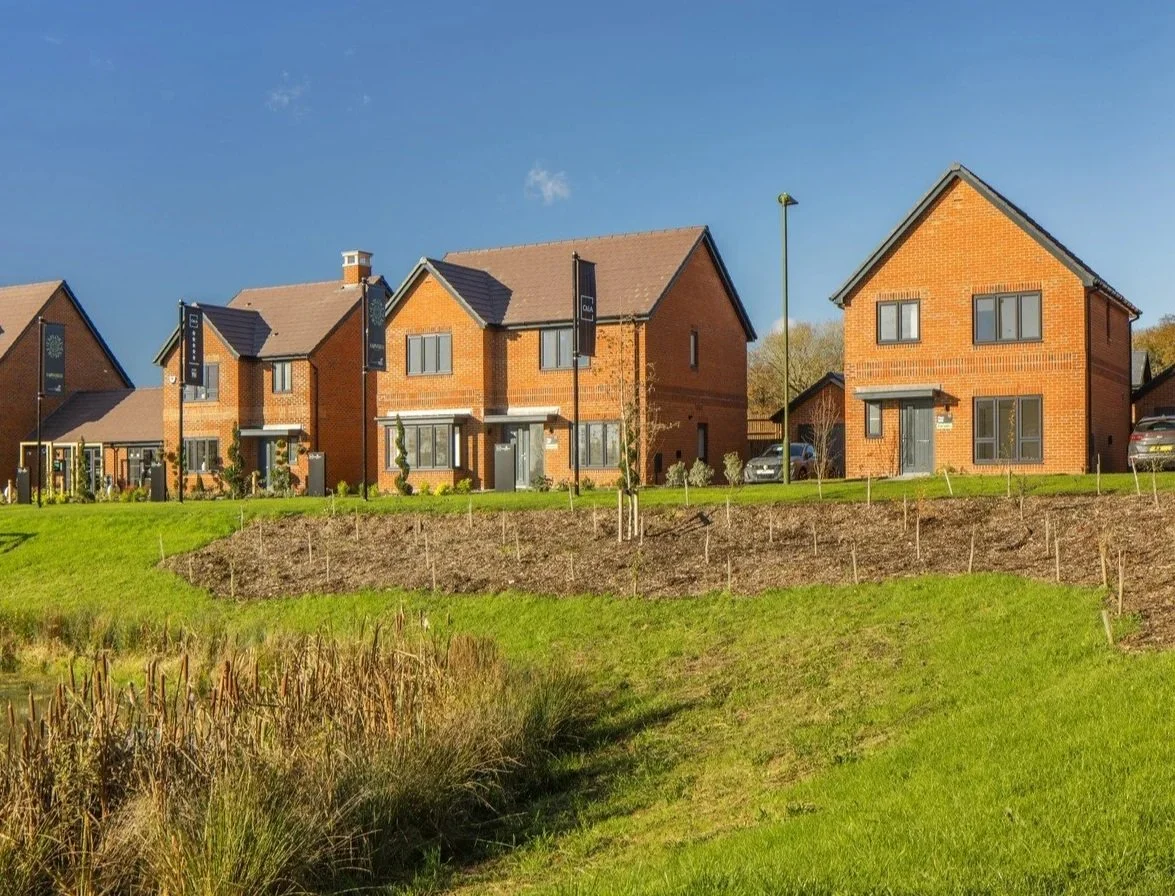
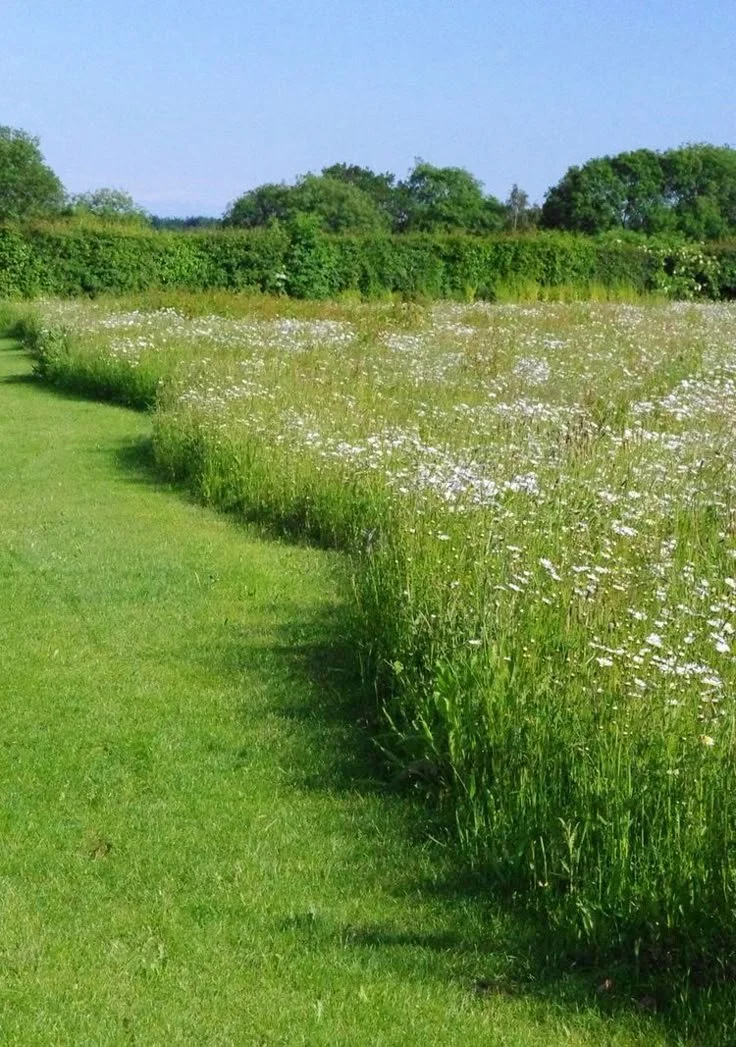
The landscape proposals will respond to the unique context of the site, with its enveloping woodland, and will deliver considerable areas for biodiversity. The scheme proposes planting of large new native species trees, new native hedgerows and extensive wildflower meadows, as well as practical multi-purpose flowering lawns, Sustainable Urban Drainage with wetland planting, and even a new orchard. All these features will contribute measurably to biodiversity locally and create a gentle buffer between the new development and the woodland context surrounding the site.
-
The proposals will include sustainable drainage that will collect and store surface water before controlled release to an existing water course on the site’s southern boundary at existing greenfield rates. The development will not be at risk from flooding nor increase the risk of flooding elsewhere.
-
The proposed development of the site will seek to adopt a range of sustainable construction techniques including prioritising sustainable materials, minimising waste generation and maximising recycling.
The houses are designed to complement other housing within the village including using materials/colours that are common in the village, so that the development will comfortably fit within its local character and context. Elevation details (e.g. window proportions, cills, bays) design cues have been drawn from the local area. The homes will sit within their landscaped setting as well as providing additional landscaping.
Off-site construction should be considered in the first instance where possible to help minimise site waste. A Waste Management Plan will be prepared to ensure good practice is adopted during construction. Bin Storage (including recycling) will be provided for the residents.